
Israeli Election: Netanyahu and Eisenkot Face Off in Tight Race
No bloc projects a majority, leaving weeks of coalition talks ahead after a campaign focused on security failures and judicial reform.
By Eric Wang ·
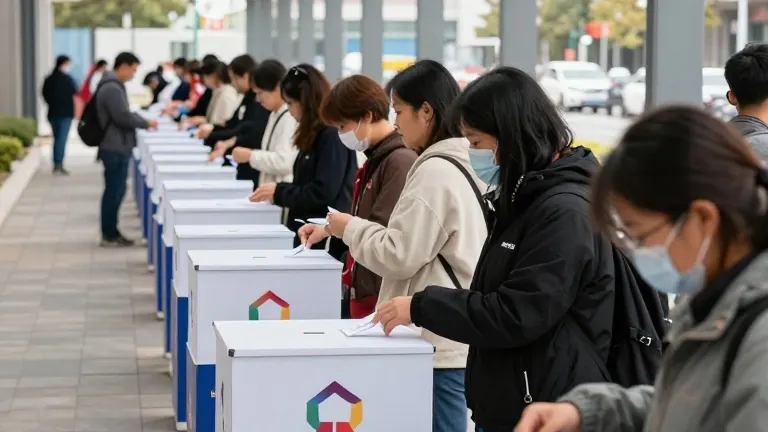
The central conflict in Israel’s upcoming general election is whether incumbent Prime Minister Benjamin Netanyahu can retain power against a unified opposition led by former military chief Gadi Eisenkot. Polling data released on Friday indicates a near tie between the two leaders. However, neither camp is projected to secure the 61 Knesset seats required to form a majority government. This arithmetic suggests a period of intense negotiation for a governing coalition could last several weeks or months.
The campaign has centered on national security. Opponents of Netanyahu cite the October 7 Hamas attacks, in which nearly 1,200 people were killed and 251 were taken hostage, as evidence of a major security failure. They have demanded an independent commission of inquiry, a measure Netanyahu has resisted, arguing it would be biased. Netanyahu has countered by positioning himself as the definitive security leader, pointing to military operations in the Middle East and his relationship with US President Donald Trump.
Eisenkot heads the newly formed Yashar Party, the flagship of the opposition coalition known as the change bloc. This alliance includes ideologically diverse figures such as former Prime Minister Naftali Bennett, Avigdor Lieberman, and left-leaning former general Yair Golan. All share the goal of replacing Netanyahu. Netanyahu’s path to victory depends on maintaining his alliance with far-right and ultra-Orthodox parties, the most right-wing coalition in Israeli history.
Two Arab party blocs are also in the race, representing a demographic that comprises about one-fifth of the population. While they could theoretically act as kingmakers, most leading Jewish parties have ruled out formal cooperation with them. The opposition has also raised concerns about democratic erosion under Netanyahu, who faces ongoing corruption trials he denies. He continues to push for judicial reforms that sparked mass protests before the war began.
Recent days have seen Netanyahu denied involvement in last-minute military plans for strikes against Iran, reports from Channel 12 and CNN suggested. He also posted an AI-generated image of a nuclear bomb hitting Tel Aviv, a move Eisenkot called hysterical. The issue of conscripting ultra-Orthodox men for military service remains a divisive point, as the government has not enforced a Supreme Court ruling on the matter.
Israelis will vote on Tuesday, with exit polls expected at 22:00 local time. Approximately 70,000 overseas voters have returned to cast ballots. Many reservists will vote as well, with their counts potentially delayed until Wednesday, a factor that could benefit right-wing parties. If no majority emerges, the country risks political deadlock, a scenario that led to five elections between 2019 and 2022.
Source: BBC News